Hello! now
 +8619886240609(Bella)
+8619886240609(Bella)
 My Account


Zener Diode: Overview of Popular Models, Parameter Comparisons, and Common Issues such as Applications
3/20/2026 1:30:58 AM
1. What is a Zener diode?
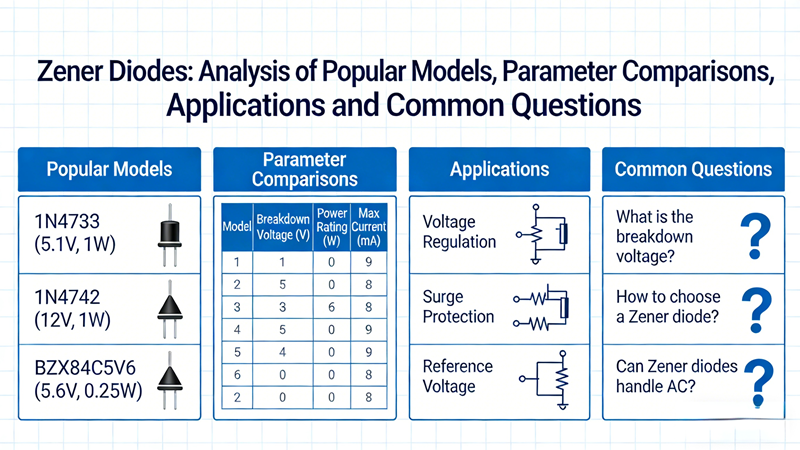
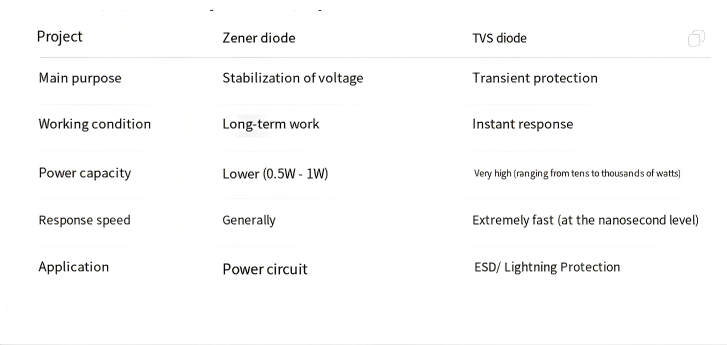
A Zener diode is a type of diode specifically designed to stabilize voltage. Unlike ordinary diodes which conduct in the forward direction and break down and get damaged when reverse-biased, a Zener diode is a semiconductor device that operates within the reverse breakdown region. Once it breaks down, it does not get damaged. At the moment of breakdown, the voltage across the two ends remains basically constant, thereby achieving the effect of stabilizing the voltage.2. What is the difference from TVS diodes?
3. How to achieve stable voltage regulation?
The structure of a zener diode is similar to that of a normal PN junction diode, but its design deliberately makes the depletion region narrower. The key to its working principle lies in the precise control of the doping concentration during the manufacturing process. The structure of a zener diode consists of a P-type semiconductor region and an N-type semiconductor region, which combine to form a PN junction.The core point is the precise regulation of the doping concentration of the PN junction, which reduces the width of the depletion region. This adjustment enables the zener diode to maintain a stable and predictable zener breakdown voltage. The breakdown voltage can vary between a few volts and several hundred volts depending on the specific application requirements.
The zener diode can be regarded as a voltage safety valve. When the voltage rises above the stable voltage value, it immediately conducts and drains the current, and then forcibly holds the voltage constant. Regardless of the fluctuations in the input voltage, the output voltage remains basically unchanged.
The most typical application is to connect a zener diode in reverse parallel to the circuit that requires voltage stabilization, with a current-limiting resistor connected in series in front, and the resulting output voltage is a stable voltage.
3.1 Three working states
- Forward bias: Completely the same as a normal diode, with a conduction voltage of approximately 0.7V and unidirectional conduction, without voltage stabilization effect.
- Reverse bias: Non-broken-down voltage, reverse voltage is low, and there is only a very small leakage current. The diode is equivalent to being disconnected.
- Reverse breakdown: When the reverse voltage reaches the breakdown voltage, the current increases sharply, and the voltage at both ends remains basically unchanged.
3.2 Two breakdown mechanisms
- Zener breakdown: Low voltage (less than 5V), strong electric field directly breaks the covalent bond
- Avalanche breakdown: High voltage (greater than 5V), electrons collide to generate a chain reaction
4. Application scenarios
- Power supply stabilization
- Voltage protection
- Reference voltage circuit
- Signal limiting
5. Core parameters of zener diodes
When selecting, the following parameters need to be given special attention:1. Stabilization voltage
Common range: 2.4V - 200V
Popular voltages:
- 3.3V (MCU system)
- 5.1V (most commonly used)
- 6.2V (minimum temperature drift)
- 12V / 24V (industrial applications)
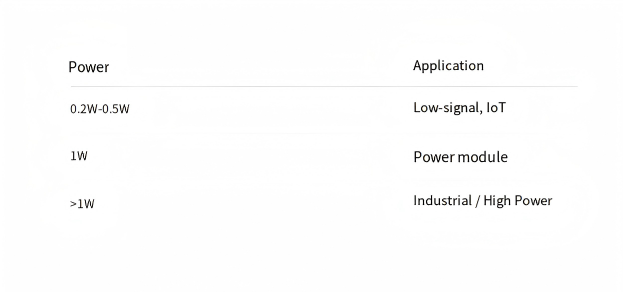
3. Precision
- ±1% (High Precision)
- ±2%
- ±5% (Standard)
- Through-hole: DO-35, DO-41
- Surface mount: SOD-123, SOT-23
6. Analysis of Popular Zener Diode Series
1. BZX55 Series - Low Cost, Widely Used- Typical models include:
- BZX55C5V1 (5.1V)
- BZX55C6V2 (6.2V)
- BZX55C12 (12V)
- Applications: Basic Voltage Stabilization Circuits, Educational Electronic Projects
- Typical models include:
- BZX79-B5V6
- BZX79-B10
- Applications: Industrial control, power protection, etc.
3.1N47xx series - High reliability + 1W power
- Typical models include:
- 1N4733A (5.1V)
- 1N4734A (5.6V)
- 1N4742A (12V)
- Applications: Power adapters, consumer electronic circuits, etc.
- Typical models include:
- BZT52C3V3 (3.3V)
- BZT52C5V1 (5.1V)
- BZT52C12 (12V)
- Applications: IoT devices, smart hardware, etc.
- Typical models include:
- BZX84C5V1
- BZX84C16
- Application: High-density PCB, wearable devices, etc.
7. Why do engineers often choose 5.1V and 6.2V?
- 5.1V: Close to TTL logic level, widely used
- 6.2V: Temperature coefficient is nearly 0, providing the best stability
Summary
Although the zener diode is a basic component, it plays a crucial role in power supply protection and protection circuits. Choosing the appropriate model can significantly enhance the stability and reliability of the circuit.- BZX series → Through-hole basic application
- 1N47xx → High-power scenarios
- BZT52 → SMD mainstream
- BZX84 → Miniaturization design
Related information



- Fast Shipping Fast and convenient door to door delivery.

- Paypment Security More than 5 different secure payment methods.

- Strictly Quality Control 365 days After-Sales Service and Warranty

- Simple And Professional One-stop Electronics Procurement Solutions.