Hello! now
 +8619886240609(Bella)
+8619886240609(Bella)
 My Account


AI still requires more memory, and the price increase of storage will continue.
1/13/2026 11:51:42 PM
Nvidia CEO Huang Rengxun stated that the market demand for internal and storage devices is urgent. "For the storage sector, this is a completely untapped and even non-existent market in the past. It is likely to become the world's largest storage market in the future, basically carrying the memory for the operation of AI worldwide." He emphasized that the infrastructure of AI has comprehensively changed the architecture of the storage market.
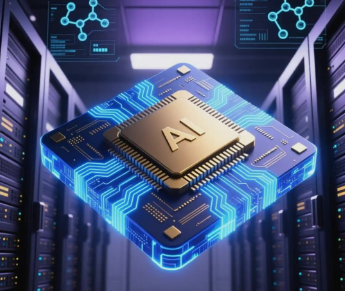
The AI wave continues to gain momentum, and the bottleneck is not just computing power.
Memory and storage are becoming key resources for AI systems. NVIDIA has sparked the AI craze, consuming a large amount of DRAM and NAND chips, resulting in a severe shortage of memory in the current market and a sharp increase in prices. Huang Renxun's remarks revealed that AI will need even more memory, and the situation of shortages and price hikes will continue. Huang Renxun analyzed that the market size of AI models grows at a 10-fold rate each year, causing the growth of AI computing power and data throughput to be exponential in scale. This is also the main reason why the demand for AI infrastructure continues to surge. And currently, it is no longer just an operation center; AI infrastructure has crossed over to a platform that connects computing and storage, becoming the main reason for the far-inadequate supply of memory compared to demand in the market. AI not only "consumes computing power", but is also frantically "eating memory".The actual demand for AI memory and storage is rapidly increasing.
The scale of large model parameters continues to expand.- Training stage: Memory-intensive applications
- The demand for HBM (High Bandwidth Memory) has skyrocketed
- The memory capacity of a single AI server has significantly increased
- DDR5 is replacing DDR4, with an increase in single strip capacity
- Inference and deployment stage: Storage capacity demand surges
- Model parameters, vector databases, log data
- Enterprise-level SSDs, NVMe, eMMC, NOR Flash are all growing simultaneously
- Edge AI → Embedded storage demand persists for a long time
The increasing demand for AI training and inference has led to a sharp increase in prices.
The growing demand for AI training and inference has caused a shortage in supply of storage chips and a surge in prices. Huang Renxun's statement: It shows that NVIDIA's various systems will maintain a strong demand for NAND storage.Samsung, SK Hynix, and Micron have collectively reduced production capacity in mature processes and prioritized resources to ensure HBM and high-end DRAM/NAND.
The core logic behind the price increase: The explosive demand driven by AI, high profit margins, and the reshaping of supply and demand structure, naturally lead to price increases.
DRAM and Flash storage have become the most direct beneficiaries, and they are also the categories with the most significant price fluctuations recently.
1. DRAM: From capacity upgrade to bandwidth upgrade, the demand structure has undergone a comprehensive change.
- DDR5 is accelerating the replacement of DDR4.
- AI servers usually require higher bandwidth and larger capacity. The advantages of DDR5 in terms of frequency, parallelism, and energy efficiency make it the mainstream choice for the new generation of AI platforms. The capacity of DRAM required per server is continuously increasing, directly driving up the overall demand.
- HBM promotes the concentration of DRAM resources to the high-end.
- As GPUs and AI acceleration cards widely adopt HBM (high-bandwidth memory), manufacturers will allocate more advanced production capacity to high-profit products, resulting in a temporary supply shortage of traditional DRAM (such as DDR4, some low-capacity specifications) at the supply end.
2. NAND Flash: The demand logic of NAND Flash shifts from "capacity-based" to "continuous growth-based"
- AI servers and data centers
- The scale of model parameters, training data, vector databases, and log files expands rapidly, driving the growth of enterprise-level SSD, NVMe storage demand. High-performance and high-reliability Flash products have become standard equipment in data centers.
- Edge AI and intelligent terminals
- In intelligent cameras, industrial vision, and AIoT devices, the demand for local inference and data caching increases, and the capacity configuration of embedded storage such as eMMC and UFS is constantly being raised.
3. SPI NOR Flash: The value of medium and low-capacity storage has been re-evaluated.
- Application scenarios continue to expand.
- SPI NOR Flash is widely used in firmware storage, system startup, and configuration data preservation, indispensable in AI edge computing devices, industrial control, communication modules, etc.
- Typical model demand grows steadily
- Taking W25Q16, W25Q32, W25Q128 as examples, these medium and low-capacity models, although each has a small single capacity, have a stable usage in terminal devices and have extremely high requirements for supply continuity.
- The impact of factory capacity adjustments
- Due to the factory's preference for high-end products and large-capacity Flash, some SPI NOR Flash production capacity has been compressed, making the market more sensitive to price changes.
Overall, AI does not simply drive up the prices of all storage products. Instead, it is a process of reshaping the market demand structure for storage. The demand for high-end DRAM and HBM is the strongest, with the most clear price support; NAND Flash has stopped falling and is on the path of recovery; SPI NOR Flash has stable demand but tight supply, and its price elasticity has increased. Against the backdrop of the continuous development of AI, this layered upward trend will continue.
Related information

- Fast Shipping Fast and convenient door to door delivery.

- Paypment Security More than 5 different secure payment methods.

- Strictly Quality Control 365 days After-Sales Service and Warranty

- Simple And Professional One-stop Electronics Procurement Solutions.