Hello! now
 +8619886240609(Bella)
+8619886240609(Bella)
 My Account


Analysis of the Storage Chip Market under the Background of Rising Electronic Components Prices
1/7/2026 1:23:20 AM
The recent increase in the prices of electronic components has drawn significant attention from suppliers, manufacturers, and even end customers. Many types of components such as Hongfa, ROHM Semiconductor, Micron, and ADI have issued price increase notices. Among them, storage chips have seen a significant price increase driven by the demand for AI computing power and servers. Due to the rising costs of key components, the prices of some end-brand products have also increased, and the cost pressure is now being transmitted to the entire product line...
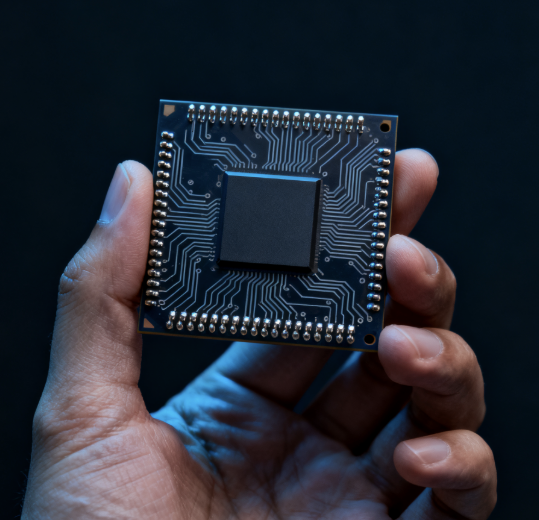
Electronic components enter a new round of price increase cycle
Changes
- Wide range: According to recent market trends, almost all types of electronic components have been affected, including resistors, capacitors, inductors, semiconductor chips, etc. From passive components to active components, from basic electronic raw materials to complex integrated circuits, the range covers the entire industrial chain.
- Large extent: The price increase range of most products is between 5% and 20%. Some rare categories have seen an increase of more than 30% due to imbalance in supply and demand or extreme fluctuations in raw materials, and even double-digit price increases have occurred.
Driving factors
- Increase in raw material costs: The prices of metals such as silver, copper, palladium, and tin have risen significantly. The price of silver began to increase from approximately 7,000 yuan/kg at the beginning of 2025 to over 17,000 yuan/kg by the end of the year, directly leading to the increase in prices of magnetic beads, capacitors, etc. The prices of copper, gold, etc. have also continued to rise.
- Structural imbalance in supply and surge in AI demand: The explosive demand for AI computing power has led to a surge in demand for storage chips, advanced process chips, etc., while capacity expansion is limited, resulting in a "demand explosion, insufficient supply" situation.
- Impact of global trade and tariff environment: The trade policies and tariff hikes of some countries have increased import costs, indirectly increasing the price volatility risk of electronic components in the global supply chain.
- Increase in logistics and labor costs: Under the backdrop of global inflation, logistics costs and labor costs have risen, further compressing the profit margins of enterprises, forcing manufacturers to transfer costs through price increases.
Storage chips have become the core category for this round of price hikes.
Within the entire electronic component system, storage chips occupy a fundamental and pivotal position. Whether it is consumer electronics, industrial equipment, or server and data center systems, memory is one of the core components that determine the performance, stability, and cost structure of the system.Details on the price increase of specific storage chip models:
- DRAM memory chips - 16Gb DDR5: Over the past year, the price has increased by approximately 500%. Due to the shortage of DRAM supply and the prioritization of AI servers over consumer-level production capacity, the prices of regular-scale groups such as DDR5 have skyrocketed.
- DRAM memory - 16Gb DDR4: Although DDR4 is gradually losing its position as a substitute, the price has still soared due to the reasons of spot supply and market capacity.
- NAND flash memory - 512Gb NAND Flash: Over the past period, the price has increased by approximately 300%. Like NAND flash memory, it also experiences high prices due to the structural tension in supply and demand.
Impact of changes in demand structure for servers, PCs, mobile phones, etc. on storage prices:
Samsung Electronics and SK Hynix plan to increase the price of server DRAM by 60% to 70% compared to the fourth quarter of 2025 in the first quarter of 2026. Both companies have simultaneously proposed similar price increase schemes to DRAM customers for personal computers and smartphones.- The price increase has taken effect, and server DRAM is the first to be affected: In this adjustment, servers have the most clear and significant price increase, with the price rising by 60% to 70% at one time. The pricing method is more inclined towards "quarterly contract + long-term agreement" in parallel, reducing the risk of price decline.
- DRAM for PCs and mobile phones is also under pressure simultaneously: The prices of mainstream specifications such as DDR5/LPDDR5X have continued to rise. Due to the compression of production capacity for DDR4 and some mature processes, DRAM is more likely to experience periodic shortages, and customer acceptance has significantly improved compared to 2024-2025, with the bargaining space narrowing.
Market judgment: The increase in DRAM prices may continue until 2027 or before.
Based on previous market conditions, this round of storage chip price increase is not a short-term phenomenon.Several judgments have emerged in the industry:
- DRAM prices may remain in a "quarterly stepped increase" pattern until 2026-2027.
- Original manufacturers will not easily increase production to avoid returning to oversupply.
- Price fluctuations will become the new normal, and it is difficult for a low-price cycle to quickly emerge.
Impact on industries and markets
- For manufacturers: Rising cost pressures will reduce profit margins and may prompt more manufacturers to focus on producing high-value-added products. Small and medium-sized manufacturers face greater risks and a more challenging competitive environment.
- For downstream customers: End products such as smart phones, laptops, servers, etc. may face cost increases and higher shipping prices.
- For industry layout: Manufacturers may pay more attention to diversified supply chains and localized layouts, reducing reliance on a single source or weak links. In the long term, price increases will help increase investment in the industrial chain and enhance production resilience.
The increase in the prices of electronic components reflects the contradiction within the global industrial chain between the structural changes in supply and demand, the surge in demand for key technologies, and the rising costs. For the industry, this is both a short-term pressure and an opportunity to promote industrial upgrading and supply chain adjustments. As decision-makers for the manufacturing and procurement of end products, it is recommended to strengthen supply chain risk management, make advance procurement plans, and adopt multi-source strategies to cope with medium- and long-term price fluctuations.
Related information


- Fast Shipping Fast and convenient door to door delivery.

- Paypment Security More than 5 different secure payment methods.

- Strictly Quality Control 365 days After-Sales Service and Warranty

- Simple And Professional One-stop Electronics Procurement Solutions.