Hello! now
 +8619886240609(Bella)
+8619886240609(Bella)
 My Account


The development landscape of passive components: growth, technology and supply chain challenges
3/11/2026 12:36:06 AM
Market size growth
It is well known that without passive components, all active chips cannot function. As of March 2026, passive components, as the fundamental components of electronic systems, have shown a structural high growth rate.- The global market size of passive electronic components exceeded 204 billion US dollars in 2025 and is expected to grow at an annual compound growth rate of approximately 5% or more from 2026 to 2034.
- The through-hole passive component market is also expanding continuously. It is projected to grow by around 42 billion US dollars from 2026 to 2035.
- The interconnection and passive component market has experienced significant growth. It is expected to grow from 212.72 billion US dollars in 2025 to a market size of 289.83 billion US dollars in 2030, with a compound annual growth rate (CAGR) of 6.6%.
The following several categories are the main drivers of growth:
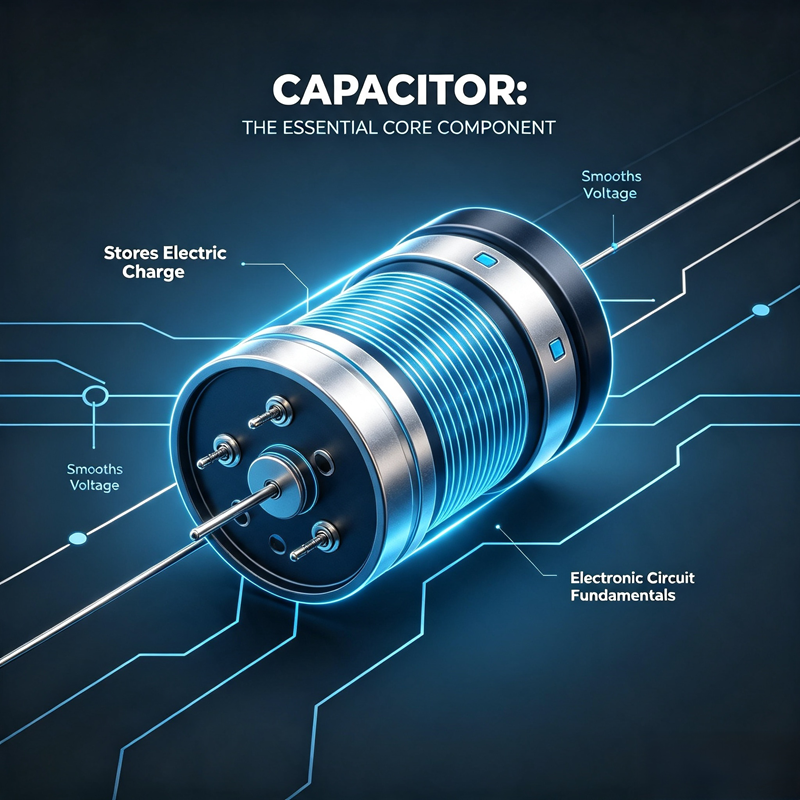
Capacitors: They typically account for the largest share of the passive component market (more than one-third), especially MLCC (multi-layer ceramic capacitors), which are experiencing rapid growth.
1.MLCC
- Market size: It will increase from approximately 104.2 billion yuan globally in 2024 to approximately 109.2 billion yuan in 2025.
- Core driver: Each AI server has about 20,000 chips, and each new energy vehicle has about 18,000 chips.
- Typical growth models:
- Vehicle-grade high-capacity, high-voltage: TDK CGA series 3225/100V/10μF (AEC-Q200, 48V power supply)
- AI server high-temperature / high-frequency resistant: Murata GRM series 0402/0603 X7R/X5R 10–100μF (-55℃~125℃)
- Miniaturized ultra-capacity: Sunon 0201/01005 1μF–10μF
- Growth in scenarios such as OBC, DC-DC, and energy storage inverters in new energy vehicles.
- Typical growth models:
- Jianghai Co., Ltd. CD29H 450V/1000μF (vehicle-grade long-life)
- Aihua Group AISHI 400V/470μF (industrial power supply)
- Growth in scenarios such as photovoltaic inverters and new energy motor controllers.
- Typical models: Falara Electronics C4D series 1200V/10μF.
- Growth in scenarios such as industrial control, medical, and military.
- Typical models: Kimer T491 series 10V/100μF
Inductors: The importance of inductors in power management and high current fields has also continued to increase.
1. Power inductorsTypical models:
- AI server large current: Murata LQM series 0603/0805 1μH–10μH, 5A+
- New energy vehicle OBC/DC-DC: TDK TFM-ALMA series 0.33μH/0.47μH, AEC-Q200
- High saturation / low loss: Sunon Electronics MWSA series 1206 4.7μH, 10A
Typical models:
- Murata LQW series 0402 1nH–100nH
- Majie Technology stacked high-frequency inductors 0201 2.2nH
Typical models: Ferrite magnetic beads 0402/0603 100Ω@100MHz
Resistors: The demand for signal regulation and circuit protection has steadily increased.
1. Vehicle-grade, high-precision resistorsTypical models:
- Sunon RT series 0402 1% 100Ω–1MΩ
- Vishay CRCW series 0603 0.1% 1kΩ
Typical models: Wangyuan LR series 2512 1W–5W 0.01Ω–1Ω
Typical driving demand industries
The growth in the demand for passive components is mainly driven by the following classic applications:- Consumer electronics: The shipment volumes of smartphones, wearable devices, and laptops are constantly increasing, and the demand for basic components such as resistors and capacitors is continuously rising.
- Automotive electronics: Electric vehicles have a higher demand for passive components in power management and battery systems. The widespread adoption of advanced driver assistance and in-vehicle infotainment systems in recent years has also increased the demand for high-performance filtering, capacitors, and anti-interference components.
- Communication and infrastructure: The demand for high-frequency passive components increases with the expansion of 5G base stations and IoT devices.
- Renewable energy and industrial equipment: Wind and solar inverters, as well as large power systems, rely on passive components to manage power performance and stability.
The trend of passive components towards miniaturization and integration
Electronic devices are evolving towards smaller size, thinner thickness, higher computing power, and lower power consumption. Therefore, passive components need to develop in the direction of being smaller, denser, and more integrated.The main three trends:
- Miniaturization: From the traditional 0603, 0805 to the current mainstream 0402, 0201, and even in high-end mobile phones, AI, and wearables, there are 01005, 008004 types of surface mount capacitors and resistors smaller than sesame seeds.
- High-frequency and high-stability materials: Ordinary materials can lead to large equipment losses, overheating, signal distortion, etc. Therefore, in the upgrading of the material system, the industry will use high-stability dielectric MLCCs such as X7R, X5R, C0G (NP0), low-loss ferrite, high-frequency ceramic cores for high-frequency inductors, and automotive-grade ones must have temperature resistance (-55°C to 150°C).
- Integrated passive components (IPD): Integrating a group of capacitors, resistors, and inductors on a small substrate, directly paired with the main chip, significantly reducing parasitic parameters and significantly enhancing high-frequency performance. It optimizes the characteristics that were previously occupying space, having many solder joints, being prone to damage, and having poor high-frequency performance.
Three major challenges for passive components in the industry chain
1. The delivery cycles for high-precision thin-film resistors and other components have been prolonged.
- The demand has surged and become concentrated.
- The supply-side production capacity is rigid and expansion is extremely slow.
- The dynamic game between manufacturing and inventory.
- The price war in mid-to-low-end products is fierce.
- The cost increase and intensified competition in the high-end market make it difficult to raise prices and profits are being compressed.
The impact and industry trend of passive components under the three major challenges
- Structural differentiation intensifies: High-end remains highly prosperous, delivery is tight, and prices are stable; mid-to-low-end has excess capacity, price wars, and thin profits.
- Domestic substitution accelerates: Domestic manufacturers break through in high-end fields such as automotive, industrial, and AI, seizing market shares from Japan and Taiwan.
- Supply chain resilience improves: Global multi-polar layout + digital collaboration, long-term reduction of fluctuations, but obvious short-term pain.
- Industry concentration increases: Small and medium-sized manufacturers are eliminated, while leading players such as Murata, Kemet, Fawang Hi-Tech, and Songluo Electronics become stronger, dominating pricing and technical direction.
Related information

- Fast Shipping Fast and convenient door to door delivery.

- Paypment Security More than 5 different secure payment methods.

- Strictly Quality Control 365 days After-Sales Service and Warranty

- Simple And Professional One-stop Electronics Procurement Solutions.